
Satellite
FLEX flies in tandem with Sentinel-3. Each pixel covers 9 hectares and reports the glow of everything inside it.
 SpaFLEXSpanish FLEX Cal/Val
SpaFLEX is Spain's contribution to ESA's FLEX mission, delivering a robust framework for calibrating and validating vegetation fluorescence at 300 m resolution.
FLEX-S3 · launch 2026 · 300 m
FLEX flies in tandem with Sentinel-3. Each pixel covers 9 hectares and reports the glow of everything inside it.
Aircraft and Sentinel-2 split that pixel into fields, tracks and tree lines, so we know what the satellite is averaging.
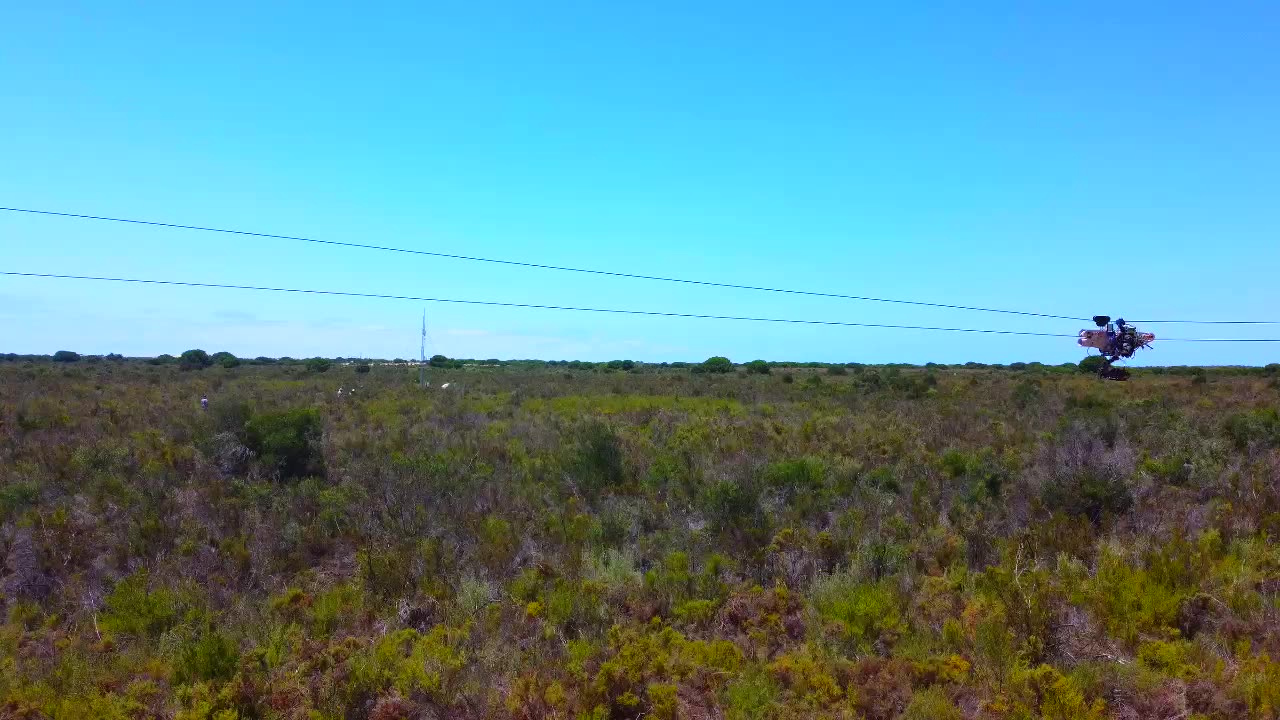
Hyperspectral drones fly over the test sites in step with the satellite overpass, reaching individual crop rows.
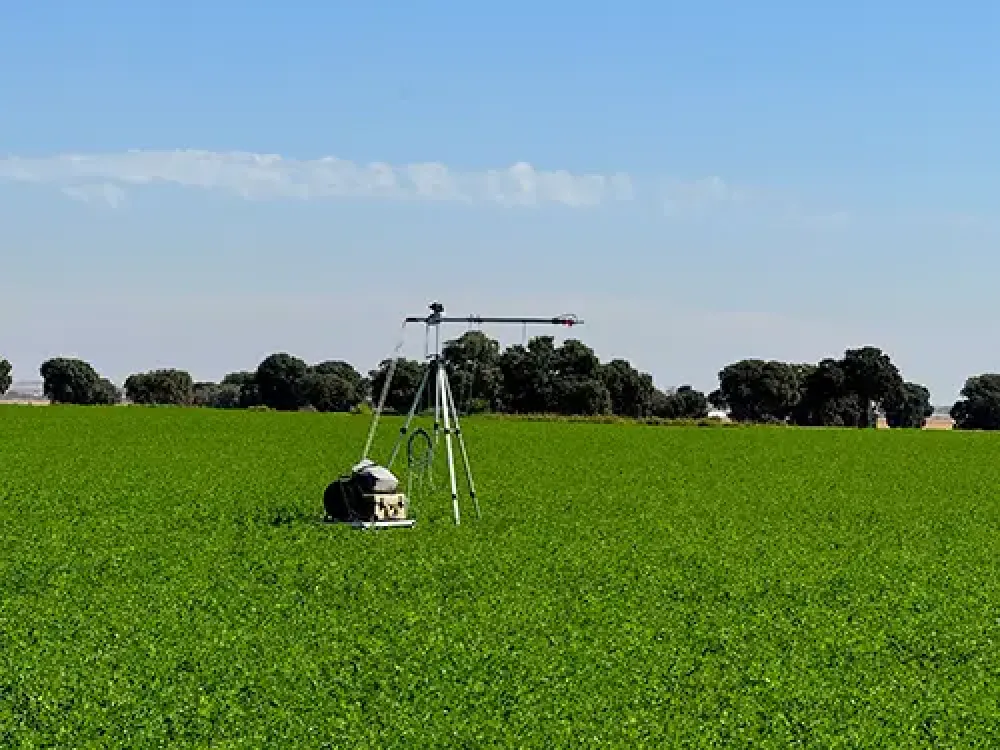
Spectroradiometers on the ground measure the glow of a single leaf. This is the reference the satellite signal is checked against.
Leaves return most near-infrared sunlight, but chlorophyll also re-emits a tiny fraction of what it absorbs, in two glowing bands near 687 and 740 nm. That is sun-induced fluorescence.
Healthy canopy: both bands shine and photosynthesis runs at full speed.
The Santa Marta test site has 4,700 hectares: about 520 FLEX pixels. To trust each one, we measure the same ground from the sky, from a drone and from the ground.
One FLEX-S3 pixel is 300 × 300 m: an entire farm folded into a single value.

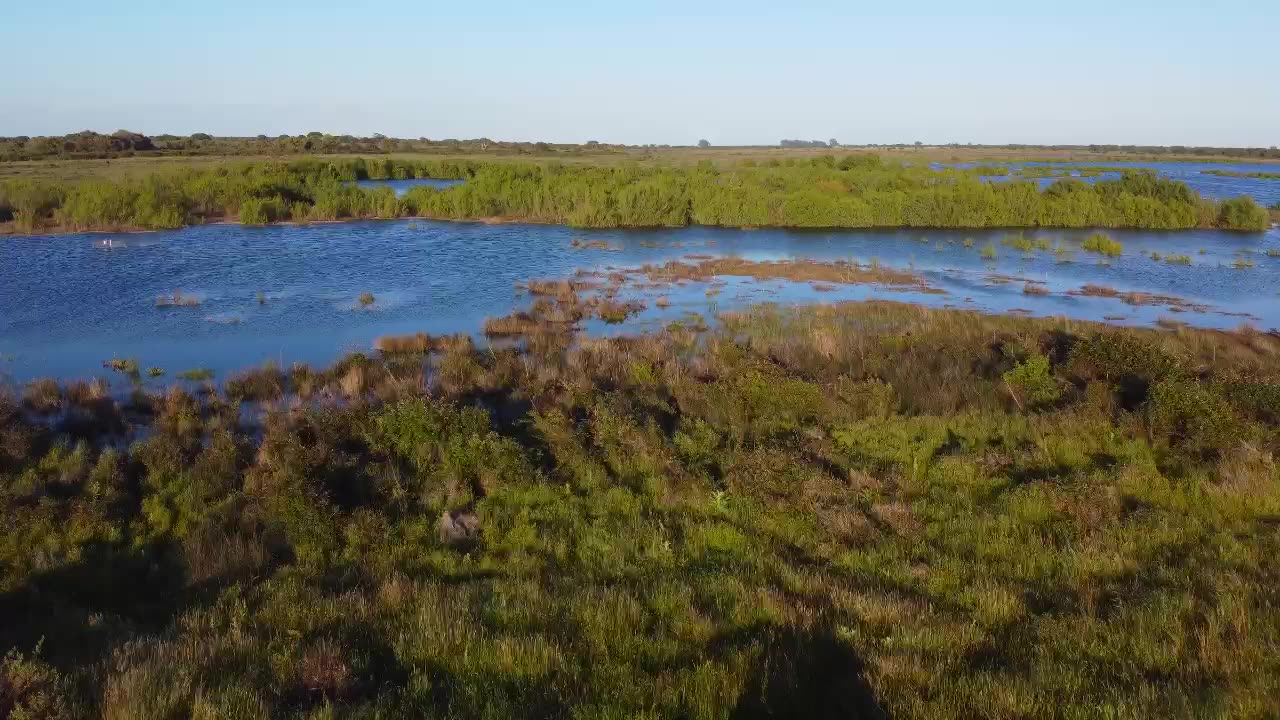
Seen from a drone: a wetland test site where SpaFLEX measures the glow.
Plants emit a faint glow
while they photosynthesise.
We cannot see it,
but a satellite can,
if the numbers are checked.


ESA's FLEX mission will measure it from orbit for the first time. SpaFLEX is Spain's contribution to calibrating and validating it.