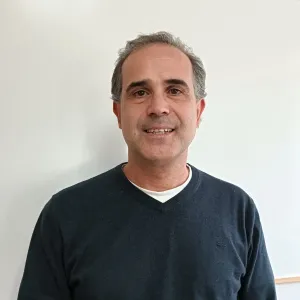
Marcos Jiménez Michavila

He has been working at the Remote Sensing Systems Area of National Institute of Aerospace Technology (INTA) since 1995, dedicated to Earth Observation remote sensing activities applied to environmental research. Currently, he is OPI Titular Researcher since 2017 and the responsible of the Field Spectroscopy instrumentation. His scientific career has been focus in Field Spectroscopy and Airborne Imaging Spectroscopy activities. His research activities are mainly focus on the development of calibration and validation (Cal/Val) protocols and spectral library acquisition using field spectroscopy, looking for the less uncertainty and major trazability of the measurements. Recently his research interest moved to develop Cal/Val protocols for Sun Induced Fluorescence (SIF). He has been principal investigator of two projects of the national program: SIMGENIO related to Cal/Val activities, and CALVALFLEX related to Cal/Val SIF protocols. He is the Co-administrator Remote Sensing Rediris list since 2000, Leader of the Field Spectroscopy thematic group of the AET.
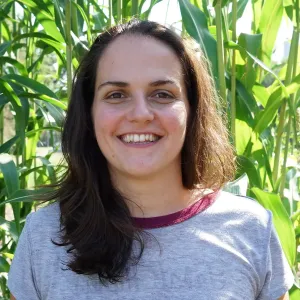
MªPilar Cendrero Mateo
She is currently a Ramón y Cajal fellow at the Desertification Research Centre (CIDE, CSIC-UV-GVA) and has been a postdoctoral researcher at the Laboratory of Earth Observation (University of Valencia) since 2018. Her work is dedicated to the integration of remotely sensed data for developing biophysical plant trait and photosynthetic rate products aimed at early stress detection. She graduated in Environmental Science (2008) and earned a Master’s in Remote Sensing (2010) from the University of Valencia, followed by a PhD at the University of Arizona. Her doctoral research focused on Sun-induced fluorescence (SIF) and its relationship to plant stress, effectively demonstrating SIF’s capacity to track photosynthetic activity. Her scientific career continued with a postdoctoral position at Forschungszentrum Jülich, where her research focused on scaling leaf-level SIF to the canopy level and contributing to the German Plant Phenotyping Program (DPPN) and ESA FLEX Cal/Val campaigns. Currently, her research interests center on the coordination of national and international projects related to plant phenotyping and FLEX Cal/Val. She has served as the Principal Investigator and coordinator for several initiatives, most notably leading the GreenCrops project.
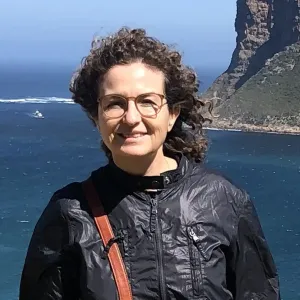
Amelia Montoro Rodríguez
She holds a PhD in Agronomic Engineering and is a Specialist in Geographic Information Systems and Remote Sensing from the University of Castilla-La Mancha. She is currently a Tenured Scientist at Spanish National Research Council (CSIC) in the Department of Ecology and Global Change and the Remote Sensing, Agronomy, and Irrigation Unit at the Research Center on Desertification (CIDE). Her entire research career has focused on the conservation and management of water resources in agriculture. She directed the Irrigation Advisory Service for 26 years, which has been a key element in water resource management in “La Mancha Oriental” region, covering 130,000 ha and integrating research with knowledge transfer. She has participated in numerous research projects, both as principal investigator and as a team member, all related to water management and ecophysiology at multiple scales, from leaf level to plant, crop, and territorial levels. Her career was recognized with the 2019 Castilla-La Mancha Innovation and Water Research Award. Her interest in the physiological mechanisms involved in plant water management has led her to conduct research related to photosynthesis, and she is currently working in the exciting field of Sun-Induced Fluorescence (SIF).
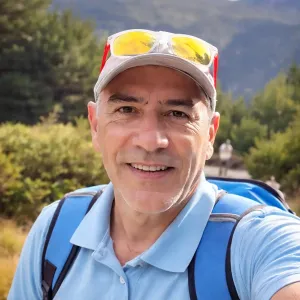
Joaquin Cobos Sabaté
He is a Senior Researcher in the Conservation Biology and Global Change Department, with strong expertise in ecosystem monitoring and remote sensing applications under global change scenarios. His research focuses on soil–plant–atmosphere interactions, carbon dynamics, air pollution impacts, and ecosystem functioning across agricultural, forest, and agro-forest systems, providing a robust ecological basis for interpreting satellite-derived signals. Since 2019, he has been the Scientific Coordinator of the Large-Scale Technological Infrastructure of the Doñana Biological Reserve (ISTIC), where he leads the design, deployment, and operation of advanced in situ monitoring systems. This infrastructure plays a key role in the calibration and validation of satellite products, particularly solar-induced chlorophyll fluorescence (SIF) within the ESA FLEX mission. His work integrates eddy covariance towers, optical and fluorescence sensors, and automated ecosystem monitoring platforms, ensuring data quality, traceability, and harmonization across technologies. He has coordinated and contributed to over 30 European and national projects, including multiple EU Framework Programmes, published 79 scientific papers (h-index 27), and supervised five PhD theses, demonstrating strong leadership in large-scale ecological observation and remote sensing validation networks.
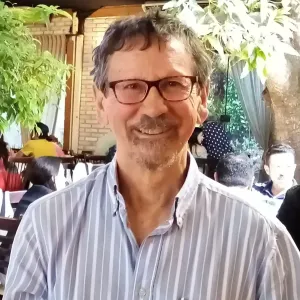
Jesús V. Delegido Gómez
Dr. Jesús Delegido is presently teaching at the Faculty of Physics, University of Valencia. PhD degree in Physics, in 1991, has since worked on several remote sensing projects and published over 80 articles in high impact journals and over 140 conference papers. He also participated in several national and international Research Projects related to remote sensing applications; thereby using LANDSAT, MERIS, CHRIS/Proba, HICO, Sentinel-2 -3, FLEX, etc. imagery on diverse goals: vegetation, LAI, chlorophyll content, optical properties, and water quality parameters. He has supervised a great number of Master Remote Sensing students, mainly in remote sensing of inland water quality.

Carolina Tenjo

She is a Ph.D. in Remote Sensing, with a focus on using remote sensing for water quality and fluorescence studies. She has solid experience in multi- and hyperspectral data analysis and in developing algorithms to extract biophysical and environmental parameters. Her work includes software development and data processing for the FLEX and CHIME missions (ESA), where she contributed to End-to-End simulators, specifically developing the scene generator module. This work supports the creation of realistic synthetic datasets and the generation of advanced Level 2 products for the missions. She combines expertise in remote sensing with practical experience in processing and analyzing complex datasets, providing tools and methods that directly support environmental and Earth observation applications.
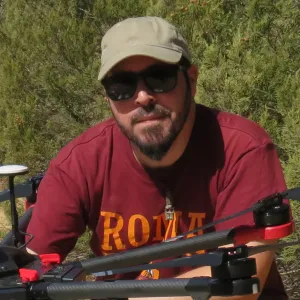
Pedro J. Gómez Giráldez
Pedro J. Gómez-Giráldez is a postdoctoral researcher at the Doñana Biological Station (EBD-CSIC, Spain), with more than ten years of experience in environmental research focused on Mediterranean ecosystems. He holds a PhD in Biogeochemical Flow Dynamics (cum laude) and has a solid background in ecohydrology, Earth Observation, and ecosystem monitoring across multiple spatial and temporal scales. His scientific career has been closely linked to the use of remote sensing as a tool to understand ecosystem functioning under climate and land-use change. His research specializes in the integration of satellite observations and in situ measurements to quantify vegetation dynamics, carbon assimilation, gross primary production (GPP), and water stress. He has extensive experience working with multispectral and hyperspectral data from missions such as Sentinel-2 and FLEX, as well as proximal sensing systems and eddy covariance flux measurements. His expertise includes scientific programming, GIS, environmental modeling, and the validation of satellite-derived biophysical and physiological products.
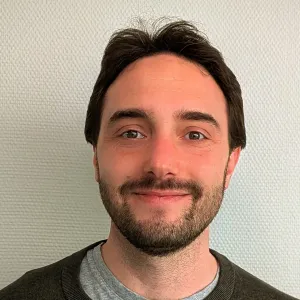
Adrián Moncholi Estornell
Adrián Moncholí-Estornell obtained his PhD in Remote Sensing from the University of Valencia in 2024. He is currently a postdoctoral researcher at the University of Valencia, within the Laboratory for Earth Observation group. His research focuses on field spectroradiometry instrumentation and measurement protocols, hyperspectral data analysis, and proximal and canopy-scale observation of vegetation optical signals. He operates the FluoCat cable-driven multisensor system for in situ retrieval and calibration/validation of vegetation fluorescence measurements. His scientific contributions have been oriented toward improving the understanding and interpretation of solar-induced chlorophyll fluorescence (SIF) as an indicator of photosynthetic activity and plant physiological status. In particular, his work addresses the physical and radiative drivers of the SIF signal, the relationship between fluorescence emission and absorbed photosynthetically active radiation, and the development of methodologies and experimental protocols for the measurement of complementary biophysical variables under both field and laboratory conditions.
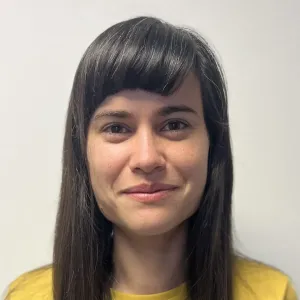
Laura Carretero Medina
Laura Carretero holds a degree in Physics and a MSc in Geophysics and Meteorology from the Complutense University of Madrid. With over a decade of experience at INTA’s Remote Sensing Systems Area, she has developed expertise in the radiometric and atmospheric correction of hyperspectral imagery. Laura has participated in the update of the data processing systems for the AHS and CASI hyperspectral sensors and in the development and implementation of a processing chain for the CFL hyperspectral sensor. Her recent work includes deriving the scientific products for the INTA ANSER–CINCLUS mission and contributing to the development of an End-to-End Performance Simulator for the SIRIUS mission, a project dedicated to monitoring Urban Heat Islands and their climatic impact through thermal infrared sensing.